
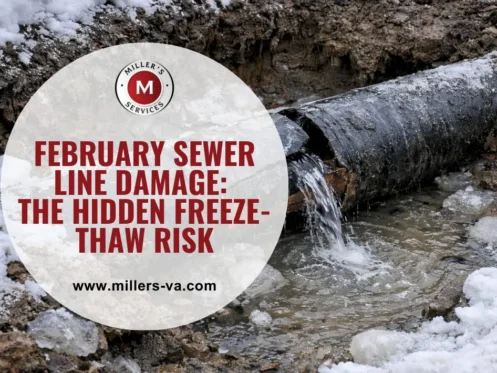
When homeowners in the Middle Peninsula, Northern Neck, Gloucester, and Williamsburg think about winter plumbing problems, they think about frozen pipes.
But here’s the truth: The most damaging winter sewer line problems often start after the freeze.
For over 50 years, Miller’s Services has been trusted to keep homes safe, dry, and flowing properly. And every year, we see the same pattern. February becomes a silent danger zone for underground sewer line damage.
Let’s break down why.
The Hidden Threat Beneath Your Yard: Freeze-Thaw Cycles
Most homeowners assume that if their pipes didn’t freeze solid in January, they’re in the clear.
Not exactly. Even when your sewer line never freezes, the ground around it does, and that’s where freeze-thaw sewer line damage begins.
Here’s Why:
- Soil freezes and expands.
- It thaws and contracts.
- It freezes again.
- The cycle repeats.
This constant movement creates ground shifting and soil pressure around your buried main sewer line and underground sewer pipes.
Over time, that pressure can:
- Crack older clay or cast iron pipes
- Separate pipe joints
- Collapse weakened sections
- Create small fractures that grow over weeks
And because sewer lines sit underground and out of sight, homeowners rarely notice until it becomes a serious backup.
Why Sewer Backups Often Show Up Weeks Later
Here’s the part most people don’t realize: Damage in January often turns into a sewer backup in February or March.
Why? Because the pipe doesn’t fail immediately.
Instead:
- Small cracks allow soil to seep in.
- Slight pipe shifts create bellies (low spots).
- Tree roots detect moisture and move toward weak joints.
- Debris slowly catches in damaged areas.
Then one day, your shower won’t drain. Or worse, wastewater backs up into your home. By the time symptoms appear, the underground sewer line damage has already progressed.
That delay is what makes February deceptive. The freeze is over, and many homeowners believe the threat is behind them. In reality, it’s just beginning to surface.
Subtle Signs of Sewer Line Stress Homeowners Miss in February
Most main line issues start quietly.
Watch for these early warning signs:
🚩 Slow drains throughout the house (not just one sink)
🚩 Gurgling sounds in toilets
🚩 Intermittent sewage smells indoors or near the yard
🚩 Wet or unusually green patches in the lawn
🚩 Water backing up in tubs when toilets flush
If multiple drains are acting up at once, it’s rarely “just a clog.” It’s often a developing sewer line repair issue that requires a professional sewer camera inspection.
Older Homes in Gloucester, Williamsburg & the Northern Neck Are Especially Vulnerable
Many homes across Middle Peninsula, Northern Neck, Gloucester, and Williamsburg were built with:
- Aging clay or cast iron sewer lines
- Shallow burial depths
- Expansive or moisture-sensitive soil
- Mature trees with aggressive root systems
These conditions significantly increase the risk of winter sewer line damage during freeze-thaw cycles.
At Miller’s Services, we’ve spent over 50 years performing sewer line inspections and sewer line repairs throughout our region. We know exactly what February ground movement can do to aging underground sewer pipes.
If your home is 30+ years old and has never had a professional sewer inspection, now is the smart time to schedule one, before small stress fractures turn into costly backups.
Prevention vs. Emergency Response: The Cost Difference
Emergency sewer line repair is stressful, disruptive, and expensive.
Preventative sewer line inspection is calm, planned, and far more affordable.
Here’s the shift:
Reactive homeowner:
“Everything’s working, so there’s no problem.”
Proactive homeowner:
“The ground just endured months of freeze-thaw stress. Let’s see if my sewer line did too.”
A professional sewer camera inspection can:
- Detect small cracks before they widen
- Catch root intrusion early
Verify proper pipe alignment - Stop backups before they enter your home
It’s peace of mind now, before spring rain and saturated soil add even more pressure underground.
Trusted for Over 50 Years: Serving Middle Peninsula, Northern Neck, Gloucester & Williamsburg
At Miller’s Services, we’ve seen what winter soil movement can do to underground plumbing systems.
We don’t just clear clogs. We diagnose the root cause of main sewer line problems.
Our team uses advanced sewer camera inspection technology and professional sewer repair equipment to identify hidden stress before it becomes a disaster.
Because protecting your home isn’t about reacting to emergencies. It’s about preventing costly sewer line repairs before they happen.
Don’t Let Winter Damage Surprise You This Spring
If you’ve noticed slow drains, unusual smells, or just want peace of mind after a harsh winter, now is the time to act.
Schedule your sewer line inspection today with Miller’s Services.
Frequently Asked Questions About Winter Sewer Line Damage in Gloucester, Williamsburg, Northern Neck, and Middle Peninsula
1. Can cold weather damage sewer lines even if they don’t freeze?
Yes. Sewer lines often become damaged during winter due to freeze-thaw cycles, even if the pipe itself never freezes solid. As soil freezes and expands, then thaws and contracts, it puts pressure on underground sewer pipes. Over time, this movement can cause cracks, joint separation, or small fractures that lead to sewer line repair issues later in the season.
2. Why do sewer backups often happen in February or March?
Many sewer backups appear weeks after the coldest temperatures pass. Winter ground movement may create minor sewer line damage in January, but symptoms often don’t show up until debris, roots, or soil gradually build up inside the pipe. That’s why homeowners in Gloucester, Williamsburg, and the Northern Neck frequently experience sewer backups later in winter or early spring.
3. How do I know if I need a sewer line inspection after winter?
You should consider a professional sewer line inspection if you notice:
- Slow drains in multiple fixtures
- Gurgling toilets
- Sewage odors
- Wet patches in your yard
- Water backing up into tubs or showers
A sewer camera inspection can detect underground sewer line damage before it turns into a costly emergency repair.
4. Are older homes more at risk for winter sewer line damage?
Yes. Homes built 30 or more years ago often have clay or cast iron sewer pipes, which are more vulnerable to cracking and shifting during freeze-thaw cycles. If your home in the Middle Peninsula, Gloucester, or Williamsburg has never had a sewer line inspection, winter is an ideal time to check for hidden stress or developing sewer line problems.